
SERVICES
“Expert Care for Every Woman’s Journey”
At Dr. Manjiri Kawde’s clinic, we offer a complete range of women’s healthcare services — from pregnancy and birthing care to advanced laparoscopic surgeries, post-menopausal clinics, contraception counselling, and cosmetic gynecology. With decades of experience, Dr. Kawde blends medical excellence with compassion, ensuring personalized care for every stage of a woman’s life.

We provide complete care for mothers-to-be, ensuring safe, supportive, and comfortable birthing experiences. From prenatal guidance to delivery, Dr. Kawde helps mothers through every stage with expert monitoring and compassionate care, focusing on both mother’s and baby’s well-being.

High-risk pregnancies need extra attention. With advanced monitoring and experience, Dr. Kawde manages complications like high blood pressure, diabetes, or multiple pregnancies. She ensures both mother and baby receive the safest care during every stage, right up to delivery.

VBAC allows women with a previous C-section to experience natural childbirth. With careful evaluation and close monitoring, Dr. Kawde helps mothers safely attempt vaginal delivery, offering a supportive environment while minimizing risks for mother and baby.
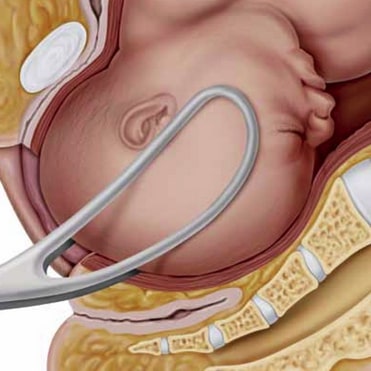
When complications arise during labor, instruments like forceps or vacuum may be used to assist delivery. Dr. Kawde ensures the procedure is safe, effective, and comfortable, prioritizing the health of both mother and child during assisted vaginal births.

In the year 2007, I came across Ms. Ruth Malik, founder of BIRTH INDIA and I was introduced to the concept of birthing other than our routine institutional practices. Eventually then, I worked with various mid wives and helped patients with hypno birthing and water birthing techniques.

A minimally invasive surgery to remove the uterus, laparoscopic hysterectomy helps treat fibroids, heavy bleeding, or pelvic conditions. It offers smaller incisions, faster recovery, and less pain, helping women return quickly to normal life with improved health outcomes.

Menopause can bring hot flashes, mood changes, bone issues, and discomfort. Dr. Kawde provides personalized post-menopausal care, including hormone therapy, lifestyle guidance, and preventive screening, ensuring women enjoy better health, comfort, and quality of life after menopause.

Endometriosis causes pelvic pain and infertility when uterine tissue grows outside the uterus. Laparoscopy helps diagnose and remove these lesions with precision. This minimally invasive approach reduces pain, restores fertility, and improves overall reproductive and hormonal health for women.

Ovarian cysts can cause pain, bloating, and menstrual irregularities. Laparoscopic surgery safely removes cysts while preserving healthy ovarian tissue. With smaller cuts, less pain, and quicker recovery, it is a safe option for young women and fertility planning.

Hysteroscopy treats polyps or uterine septum that affect fertility or cause bleeding. A small camera allows precise removal without external cuts. This safe, day-care procedure helps restore normal uterine health, improves chances of pregnancy, and relieves related symptoms effectively.

Blocked fallopian tubes can cause infertility. Hysteroscopic cannulation gently opens blocked tubes using fine instruments, improving natural conception chances without major surgery. It is a safe, quick, and effective solution for women facing difficulty in becoming pregnant.

Adhesions (scar tissue) inside the uterus can cause infertility, irregular periods, or miscarriages. Hysteroscopic resection removes these adhesions precisely, restoring normal uterine shape. This minimally invasive procedure improves fertility outcomes and helps women achieve healthier reproductive cycles.
We offer advanced laparoscopic surgery for ectopic pregnancy, ensuring precise diagnosis and treatment through minimally invasive techniques. Our expert team prioritizes safety, rapid recovery, and preservation of reproductive health, providing compassionate care during this critical and sensitive condition
Description
In Year 2007, I came across Ms. Ruth Malik founder of Birth India and I was Introduced Concept of birthing other than our routine institutional practice.Then eventually I worked with various midwifes of Birth India and helped patients with hypnobirthing and water birthing. Hypnobirthing was more to take care of lady’s pain by keeping her with a Strong mindset.
Hypno birth practice is to take care of the lady in labour by creating a strong mindset to face labour pain or discomfort. This is achieved by antenatal classes to orient them to actual labour stages. These women implement the hypno birth techniques during their actual labour.
As against to that, Water birthing is an actual surrounding to ease the lady in labour. Once labour is established, ” 3-4 cms dilatation onwards” mother is shifted to warm water birthing pool. To support your journey, One birth attendant along with the medical attendant keeps the ambience softer and nutrition as well as mental support.
ADVANTAGES FOR THE MOTHER:
- Significant pain relief due to warm water surrounding.
- Floating effect of the tummy gives mechanical advantage over constant sagging.
- Repeated contractions and relaxations during labour gives fatigue to the back and thigh muscles which becomes comparatively less in the warm water birthing pool.
Various positions in the water pool are taught to complete the labour journey.
- Bouncy movements in water at the later stages helps her in pushing down the baby well.
- The crowning process of the baby is well understood by the mother in the sitting position by the physical touch or even by showing the mirror.
- Thus co-operation of the birthing mother is higher and chances of perineal tears are lesser.
- Taking away the anxiety and discomfort of the labour pains,thus, results in maintaining normal maternal pulse and BP, reflecting normal foetal heart rate.
ADVANATGES FOR THE BABY:
- Baby is expelled gently into the next water environment. • Baby breathes comfortably under water same as before birth in the mother’s womb.
- Baby is then put to the mother’s chest above the water level which acts as a warm incubator, giving skin to skin touch advantages.
Baby hears the same heart beats of the mother and still
Uterine fibroids, also known as uterineleiomyoma, myoma, fibromyoma, fibroleiomyoma, are benign smooth muscle tumors of the uterus. Most women have no symptoms while others may have painful or heavy periods. . If they push on the bladder a frequent need to urinate may occur. They may also cause pain during sex or lower back pain. A woman can have one uterine fibroid or many of them. Occasionally fibroids may make it difficult to get pregnant although this is uncommon.
While fibroids are common,they are not a typical cause for infertility, accounting for about 3% of reasons why a woman may not be able to have a child. The majority of women with uterine fibroids will have normal pregnancy outcomes. In cases of uterine fibroids with infertility, a fibroid is typically located in a sub mucosal position and it is thought that this location may interfere with the function of the lining and the ability of the embryo to implant. Also larger fibroids may distort or block the fallopian tubes.
Myomectomy is surgery to take out fibroid and preserve uterus. Depending on the size, number and location of your fibroids, your surgeon may choose one of three surgical approach.
Abdominal myomectomy In abdominal myomectomy (laparotomy), your surgeon makes an open abdominal incision to access your uterus and remove fibroids. Generally done for very large fibroids (more than 22 weeks size) where laparoscopic is not a right choice or patient who has multiple previous surgery and expected to have lots of adhesions. Your surgeon enters the pelvic cavity through one of two incisions:
- A horizontal bikini-line incision that runs about an inch (about 2.5 centimeters) above your pubic bone. This incision follows your natural skin lines, so it usually results in a thinner scar and causes less pain than a vertical incision does. It may be only 3 to 4 inches (8 to 10 centimeters), but may be much longer. Because it limits the surgeon’s access to your pelvic cavity, a bikini-line incision may not be appropriate if you have a large fibroid.
- A vertical incision that starts in the middle of your abdomen and extends from just below your navel to just above your pubic bone. This gives your surgeon greater access to your uterus than a horizontal incision does and it reduces bleeding. It’s rarely used, unless your uterus is so big that it extends up past your navel.
Laparoscopic or robotic myomectomy
In laparoscopic or robotic myomectomy, minimally invasive procedures, your surgeon accesses and removes fibroids through several small abdominal incisions.
During laparoscopic myomectomy, your surgeon makes a small incision in or near your bellybutton. Co2 gas is introduced to elevate abdominal wall then laparoscope is introduced — a narrow tube fitted with a camera — into your abdomen. Surgery is performed with instruments inserted through other small incisions in your abdominal wall.
During robotic myomectomy, instruments are inserted through similar small incisions, and the surgeon controls movement of instruments from a separate console, but surgery essentially remains same. Incision is made on uterine surface, fibroid is enucleated from the surrounding muscles; the dead space created is approximated with multiple sutures, surface of uterus wall is then covered with adhesion barrier material.
Fibroid is cut into smaller pieces and removed through these small incisions in the abdominal wall.
Laparoscopic and robotic surgery use smaller incisions than a laparotomy does. This means you may have less pain, lose less blood and return to normal activities more quickly than with a laparotomy. Uterine size and fibroid number and location are factors that determines length of surgery.
Hysteroscopic myomectomy To treat fibroids that bulge significantly into your uterine cavity (submucosal fibroids), your surgeon may suggest a hysteroscopic myomectomy. Surgeon inserts a small, lighted instrument — called a resectoscope because it cuts (resects) tissue using electricity or a laser beam — through your vagina and cervix and into your uterus. A clear liquid, usually a sterile salt solution, is inserted into your uterus to expand your uterine cavity and allow examination of the uterine walls. Using the resectoscope, your surgeon then shaves pieces from the fibroid until it aligns with the surface of your uterine cavity. The removed tissue washes out with the clear liquid that’s used to expand your uterus during the procedure. Rarely, surgeons also use a laparoscope inserted through a small incision in your abdomen to view the pelvic organs and monitor the outside of the uterus during a complicated hysteroscopic myomectomy.
When you go home At discharge from the hospital, your doctor prescribes oral pain medication along with antibiotics. You may have to avoid certain activities, such as driving, lifting heavy objects, climbing stairs or exercising vigorously until you recover. Also, your doctor may advise that you not use tampons or have sexual intercourse during recovery. You can expect some vaginal spotting or staining for a few days up to six weeks, depending on the type of procedure you’ve had. Gas introduced in the abdomen takes 3-4 days to dissolve and come out, till then you can experience shoulder pain in upright position as it elevate the diaphragm
- Abdominal myomectomy recovery typically takes four to six weeks.
- Laparoscopic or robotic myomectomy recovery typically takes two to three weeks.
- Hysteroscopic myomectomy recovery typically takes less than a week.
- Less pain post-operatively
- Smaller cuts (only 5mm)
- Faster recovery and discharge from hospital
- Quicker return to normal activity and lifestyle
Risks of myomectomy include:
- Excessive blood loss. Many women already have low blood counts (anemia) due to heavy menstrual bleeding, and need for blood transfusions.
- Scar tissue. … in uterine wall is generally stronger in open surgery as compared to laparoscopy.
- Rare chance of hysterectomy…. Generally patients with multiple fibroids who although insist on retaining uterus should know about it.